Dining

Best credit cards for dining in Singapore

The card that earns you the most on food isn't usually the one marketed as a "dining card." We ran a real S$1,200 month of eating out through the numbers — minimum spends, caps and all — to see what actually wins.

Milestacker · Card data checked 22 August 2026 · 8 cards ranked

Search "best credit card for dining in Singapore" and you'll get a pile of lists with the word dining stamped on the title. Most of them are a bit off — not because anyone's being lazy, just because of how these bonuses actually work.

Banks here rarely reward the restaurant itself. They reward how you pay — a tap of your phone, an online order, spending in another currency — and dining just happens to be where a lot of that spending lands anyway. Read the fine print and a few of the best cards for food spend don't mention food once.

So rather than another "top dining cards" list, here's what actually happens to S$1,200 of dining inside a S$2,000 month, once every cap and minimum spend gets applied. The order might surprise you — and that's kind of the whole point.

The month being ranked

S$1,200 of dining in a S$2,000 month

DiningS$1,200
GroceriesS$300
TransportS$200
ShoppingS$200
Bills & utilitiesS$100
TotalS$2,000

Dining dominant but not alone: a card with a whole-card minimum spend has to clear it on realistic total spend, not on the dining line by itself.

Put in your own numbers and this order will probably shuffle — sometimes a lot. That's expected: it just means your spending doesn't look like this month.

The three that earn most

1
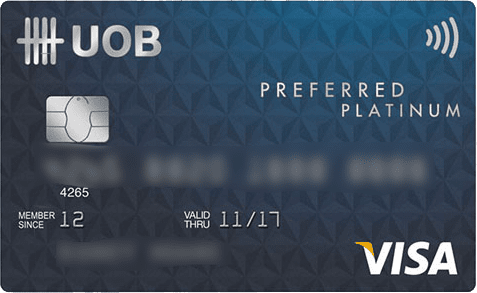
UOB UOB Preferred Visa Card (formerly Preferred Platinum Visa)

UOB

UOB Preferred Visa Card (formerly Preferred Platinum Visa)

UOB Preferred Visa Card (formerly Preferred Platinum Visa)

UOB · mobile contactless & online

Earns
5,120
miles a month
Effective
2.56
mpd, best rate 4
The catch
Caps at S$600/month

Two separate bonuses here, and dining can catch either one. Order delivery or pay online at a restaurant and it falls in the online bucket; tap your phone at the table and it falls in the mobile bucket. Each has its own S$600 monthly ceiling and neither will lend the other its unused room, so the practical cap on food spend depends on how you split it. The one thing that earns nothing extra is tapping the physical card — UOB stopped paying that bonus in 2020, and it's a quarter of the rate for an identical meal.

View at UOB
2
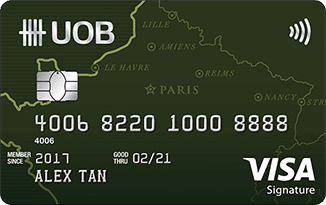
UOB UOB Visa Signature Card

UOB

UOB Visa Signature Card

UOB Visa Signature Card

UOB · overseas spend & local contactless/petrol

Earns
5,120
miles a month
Effective
2.56
mpd, best rate 4
The catch
Needs S$1,000/month first

You won't find the word "dining" anywhere in this card's terms — and that's exactly why it wins here. The bonus is on contactless payments, full stop, and since almost every restaurant in Singapore takes a tap, your food spend rides along for free. Two catches worth knowing: the tap has to be contactless (chip-and-PIN or a swipe earns nothing extra, though unlike UOB's Preferred card a tap of the plastic itself is fine), and you need S$1,000 of local contactless spend in the month before any of it kicks in — spending abroad counts towards a different bucket entirely.

View at UOB
3
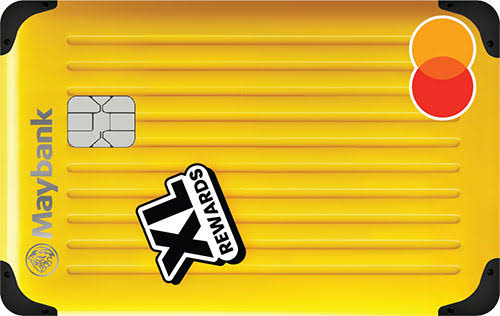
Maybank Maybank XL Rewards Card

Maybank

Maybank XL Rewards Card

Maybank XL Rewards Card

Maybank · FCY + dining/shopping/flights/entertainment up to the monthly cap

Earns
4,360
miles a month
Effective
2.18
mpd, best rate 4
The catch
Caps at S$1,000/month

This one genuinely does bonus dining, and at a good rate — but with two real catches. You need S$500 of eligible spend before anything unlocks, and that's measured against your whole card, not just what you spend on food. Then it caps at S$1,000 a month. The bigger catch is who can even get it: Maybank won't approve anyone 40 or older, whatever their income, so for a lot of people this one isn't on the table at all.

Before you apply. Requires applicants aged 21–39 — Maybank auto-rejects anyone 40 or older, whatever their income.

View at Maybank

Every card here drops to about 0.4 miles a dollar once the bonus runs out. So this isn't really a ranking of rates — it's a ranking of how long each one lasts before it does.

What trips people up

You have to spend before you earn

Most of these bonuses don't switch on until you've hit a minimum spend for the month — and it's usually measured across your whole card, not just what you spend on food. Fall short and even a "4 mpd dining card" pays the base rate all month long.

Caps hit sooner than you'd think

S$1,000 of bonused spend a month is the usual ceiling. On a big dining month you can blow through that in under three weeks — everything after just earns the base rate for the rest of the month.

How you tap changes what you earn

Some bonuses only work if you pay with a mobile wallet. Tap the physical card instead, or insert the chip, and you can end up earning a quarter of what paying with your phone would have gotten you — on the exact same card.

Delivery and eating out aren't the same thing

If a card bonuses online spend, a delivery order earns the high rate — the same meal eaten at the restaurant might not. Worth knowing before you assume "dining" covers all your food spend equally.

Why the top card isn't really a "dining" card

The cards at the top of this page bonus a way of paying, not a type of purchase. Contactless taps, online checkouts, foreign currency — these are categories a bank can define cleanly and cap tightly. Dining qualifies simply because restaurants take contactless payments, not because anyone at the bank sat down and decided to reward eating out specifically.

That has a pretty practical effect: the same card can be brilliant for you and pretty average for your friend, purely based on how each of you pays. If you always hand over a physical card at the table, most of the rates on this page aren't really available to you — whichever card happens to be in your wallet.

What we left out on purpose

Annual fees, foreign transaction fees and sign-up bonuses are all excluded. A juicy welcome bonus can make a card look unbeatable in year one and pretty ordinary after that — mixing the two together would give you a number that isn't really true of either.

Relationship tiers, too. A few banks pay noticeably better rates if you keep a chunk of money parked with them — HSBC's best rate needs S$50,000 sitting in one account. Ranking on numbers most people can't actually reach would make this page look nicer and be a lot less useful.

Questions people actually ask

Does food delivery count as dining?
If the card bonuses online spend, yes — and it's often the better deal, since a delivery order goes through as an online transaction while the same meal eaten in the restaurant might not. If the card bonuses a merchant category instead, it depends on how the delivery app itself is coded, which can vary and occasionally changes without warning.
Why are these rates lower than what I've seen elsewhere?
Every number here is in KrisFlyer miles, with each card's conversion already worked out. Banks usually advertise whichever transfer partner makes the card look best, and for a few of these cards that partner pays out more miles per point than KrisFlyer does. Where a card's advertised rate is higher than what's shown here, we say so right on the card.
Can I just get the top card and stop thinking about it?
For this exact basket, pretty much — but the caps are the catch. Once you're past a card's monthly limit, a second card earning its own bonus beats the first one sitting at base rate, and that point usually comes sooner than people expect.
How up to date is this?
These numbers come from the same data our planner uses, and every rate that matters is checked against a dated source. That said, card terms in Singapore change a few times a year and banks don't always announce it loudly — always worth double-checking with the bank before you apply.

How these numbers are worked out

Every rate is quoted in KrisFlyer miles, with each card's points-to-miles conversion already applied. That makes cards comparable to each other, but it means these figures sit below the headline rates issuers and review sites publish, which are usually quoted in the card's own points or at its best transfer partner.

The ranking is produced by running the same engine the planner uses, with one card held and the basket above as the month's spend. Monthly bonus caps, minimum-spend gates and category exclusions are all applied, so a card whose bonus runs out halfway through the month ranks on what it actually earned.

Not included: annual fees, foreign transaction fees, sign-up bonuses, and any relationship tier you have to hold a balance to unlock. Card terms change often — confirm with the bank before applying. Full disclaimer.

Other rankings

This ranking used a made-up month. Yours is different.

Put in your real numbers and Milestacker will show you which card — from the ones you already have, plus whatever you're missing — actually earns you the most. Free, no login, nothing leaves your browser.

Build my stack